Brown Butter Pumpkin Polenta with Roasted Fall Vegetables

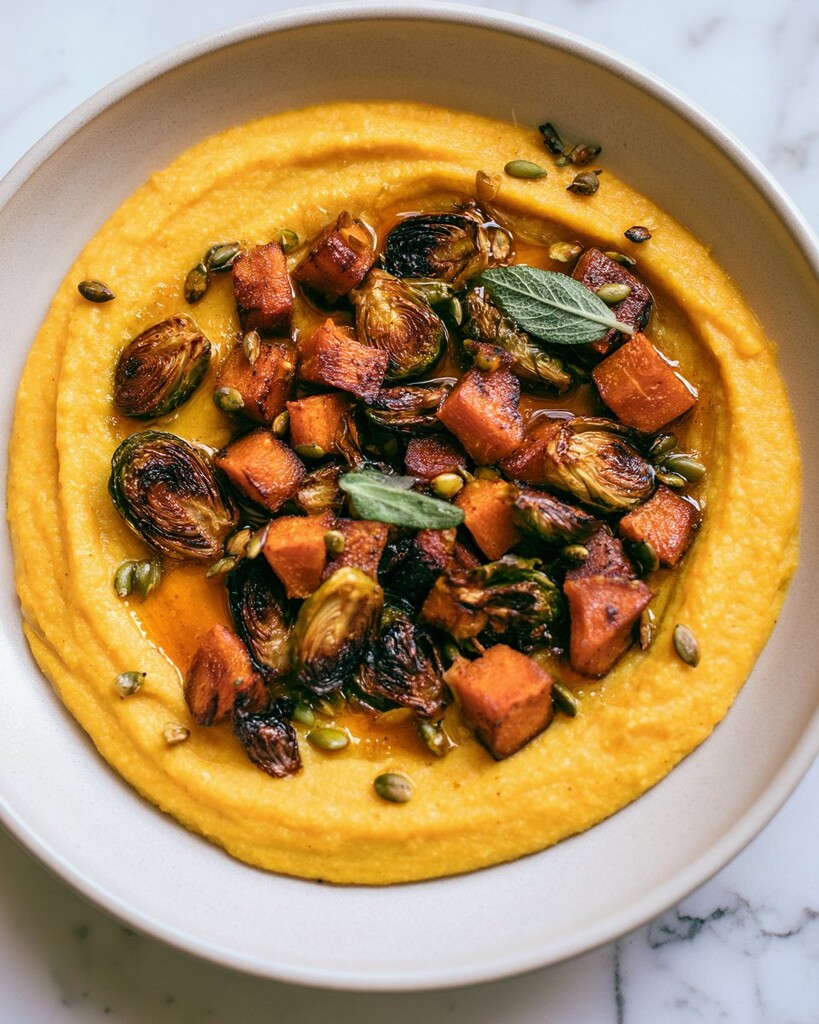
This quick brown butter pumpkin polenta pairs deeply roasted winter vegetables with a savory, parmesan-laced cornmeal base. My favorite part is hearing the fresh sage leaves sizzle and crackle in the hot skillet before spooning that golden butter over the bowls.
 This post may contain affiliate links.
Why This Quick Polenta Formula Works
Pureed squash adds a ton of hidden moisture that usually turns cooked cornmeal into soup. I adjust the liquid ratios here, skipping water entirely in favor of 4 cups of combined broth and milk. This tight liquid-to-grain ratio gives the dish a sturdy enough structure to hold up the heavy vegetables without collapsing on the plate.
Making the Polenta and Vegetables
A sheet pan dinner needs contrasting textures to feel like a full meal, so we roast the vegetables at 425°F while the grains simmer on the stove.
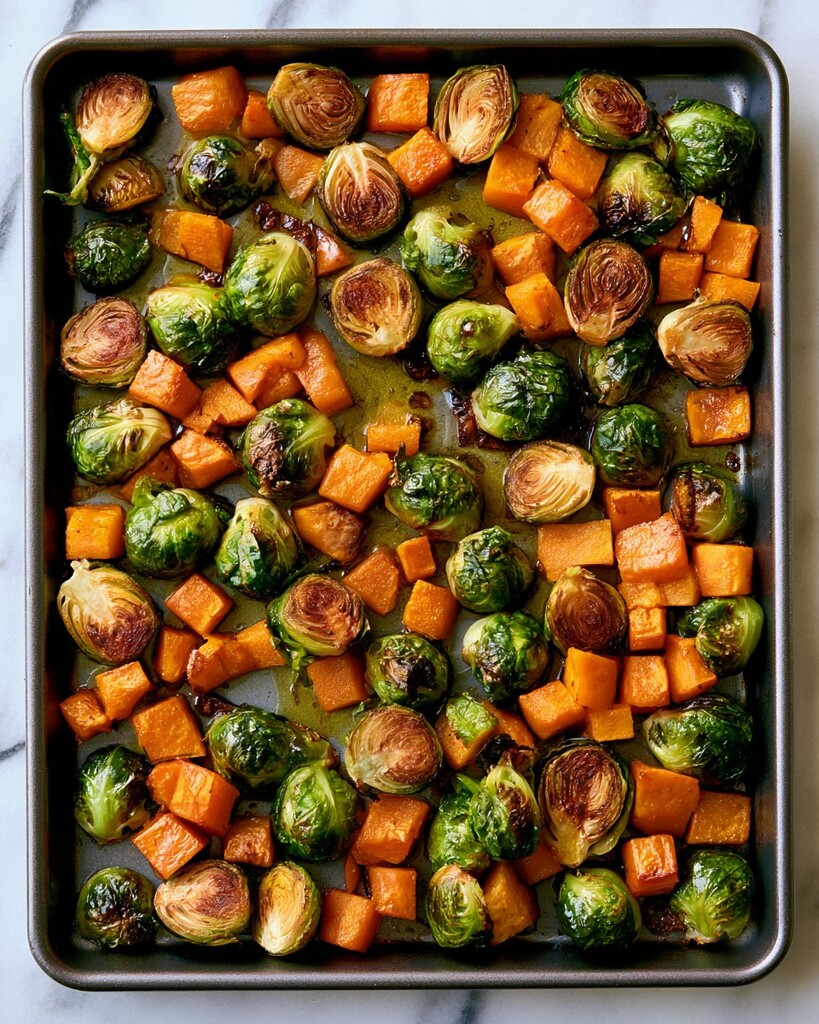
Roast the vegetables. Cut the Brussels sprouts in half and cube the butternut squash. Coat them generously with olive oil, salt, and pepper, then roast for 20 to 25 minutes. You want the edges to look aggressively browned and charred, which brings out their natural sweetness.
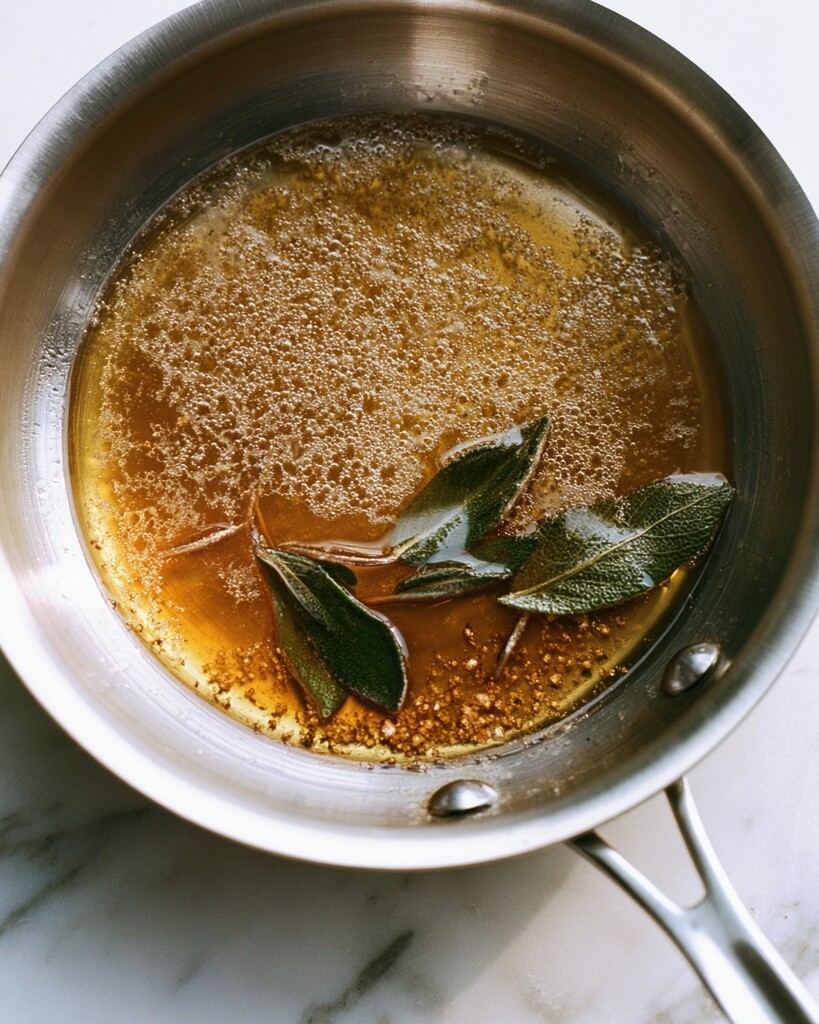
Crisp the sage in brown butter. Melting the butter and crisping the leaves happens fast. Watch the pan closely because the fat transitions from a nutty golden hue to black and bitter in about ten seconds. Pull the skillet off the heat immediately when you see toasted brown specks on the bottom, and use a fork to transfer the sage to a paper towel.
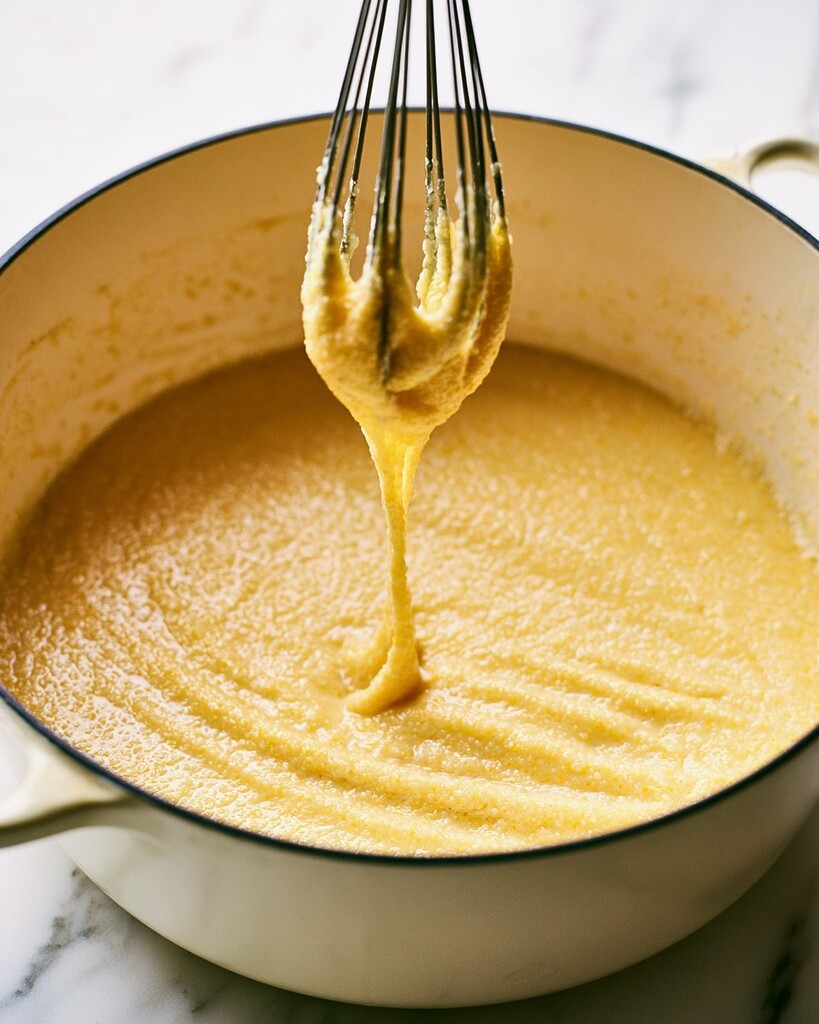
Simmer and whisk. Bring the vegetable broth and whole milk to a gentle simmer in a large pot. Pour the quick-cooking grains in a steady stream, whisking constantly so clumps do not form in the hot liquid. It takes about five to seven minutes to thicken.
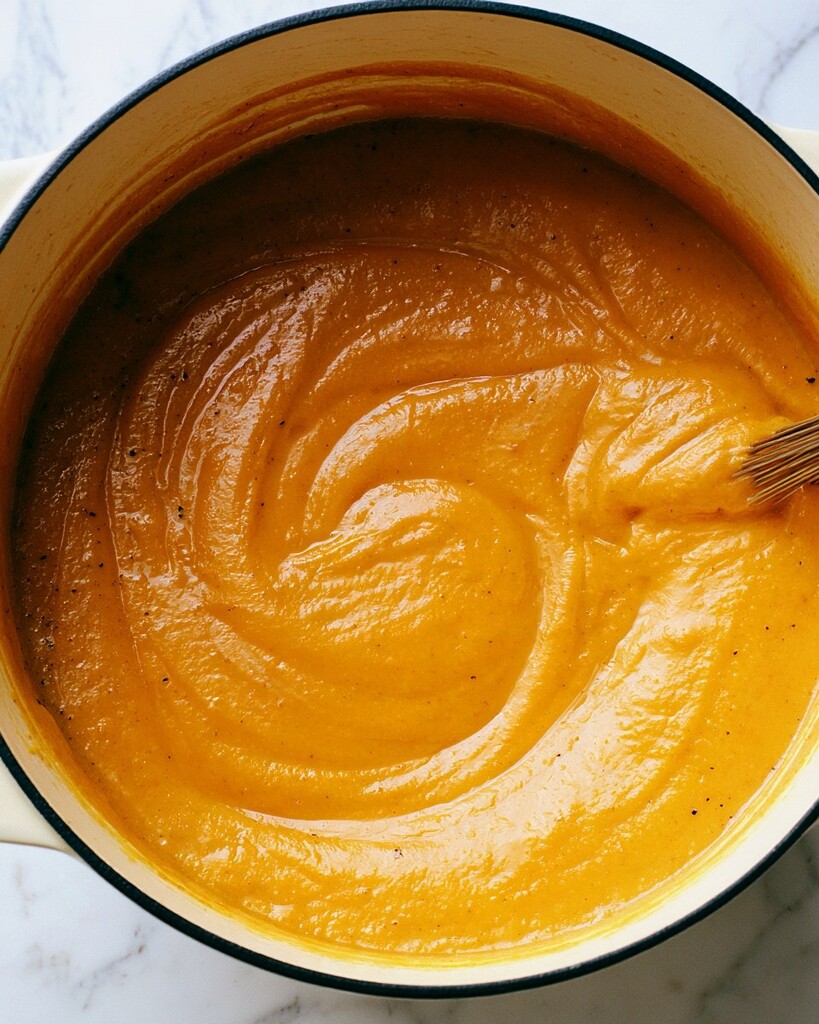
Fold and season. Once the pot is off the stove, stir in the puree and the freshly grated Parmesan. I always give this a heavy crack of black pepper and taste it before portioning, as the saltiness of the cheese can vary widely.
Building the Bowls
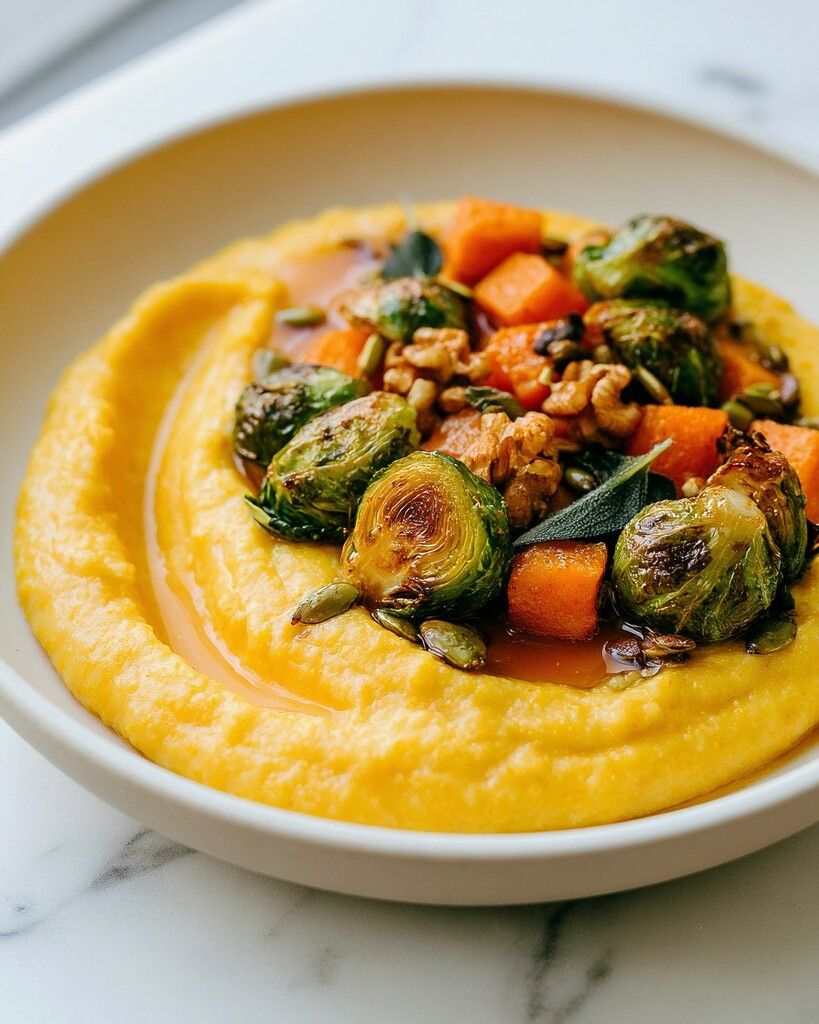
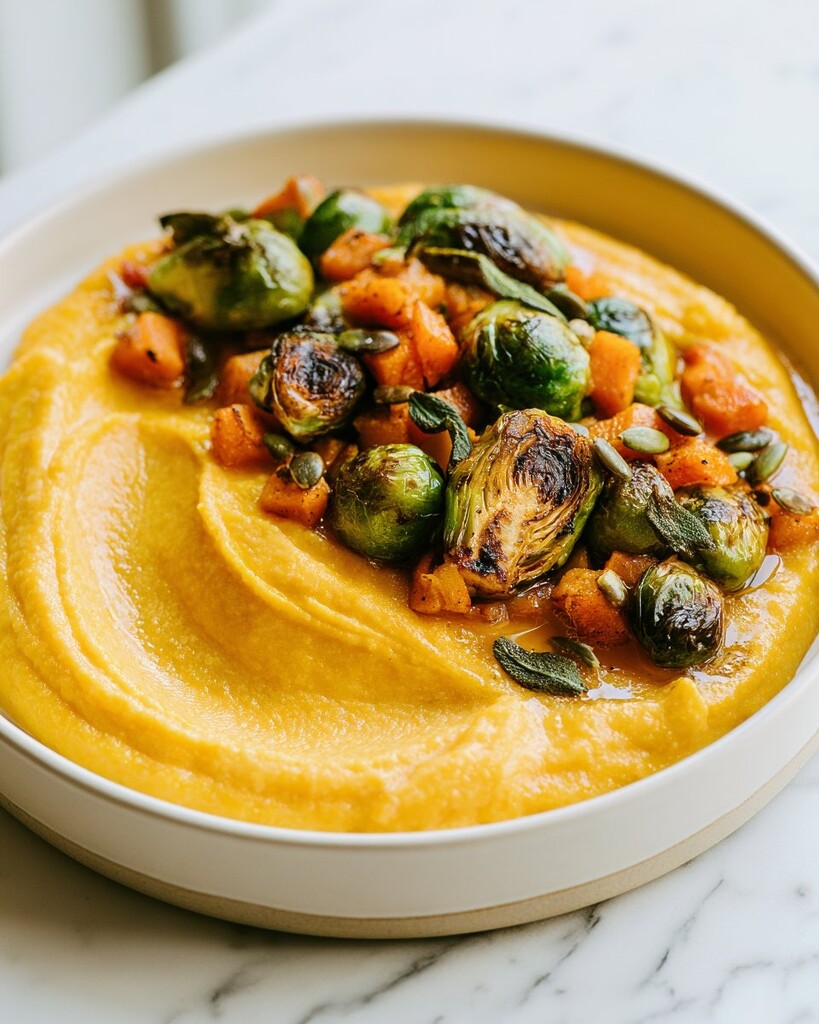
Spoon the thick base into wide, shallow dishes so the vegetables have plenty of surface area to sit on. Drizzle the browned butter directly over the vegetables, then scatter the crispy sage and toasted pepitas across the top for crunch.
If you want a fresh contrast to the heavy grains, serve a crisp autumn apple walnut salad on the side, or finish the meal with a batch of cozy oatmeal cranberry cookies.
Storing and Reheating Leftovers
- Keep the roasted vegetables and the creamy base in separate airtight containers in the fridge for up to four days.
- The grains will solidify into a firm block when chilled. To revive the smooth texture, reheat portions in a saucepan over low heat, whisking in a splash of milk or broth until the mixture loosens up.
- Warm the vegetables separately in a 350°F oven for ten minutes to keep their edges firm.
Common Pumpkin Polenta Questions
Can I use regular cornmeal instead of the quick-cooking kind?
Yes, but the liquid ratios and timeline will change dramatically. Standard stone-ground varieties require about 45 minutes of simmering and a higher volume of broth to soften the hard starch.
Can I use a sugar pumpkin instead of canned puree?
You can roast and blend your own squash, but drain it well through a sieve first. Canned puree has a highly concentrated, consistent moisture level that keeps the final texture predictable.
How do I prevent lumps when whisking?
Pour the dry grains into the simmering liquid in a very slow, thin stream while whisking vigorously with your other hand. If you dump it all in at once, the starches instantly bind together into dry clumps.
This 40-minute meal hits all my favorite macros for a satisfying vegetarian dinner, keeping the prep timeline tight without sacrificing that rich, slow-simmered feel.
Print
Brown Butter Pumpkin Polenta with Roasted Vegetables
Creamy, rich pumpkin polenta topped with caramelized Brussels sprouts and tender butternut squash. Finishing the dish with a quick nutty brown butter and crispy whole sage leaves elevates the simple ingredients into a stunning, restaurant-quality meal.
- Total Time40 minutes
- Yield4 servings 1x
Ingredients
Roasted Vegetables
- 1 lb (450g) Brussels sprouts, trimmed and halved
- 1 lb (450g) peeled and cubed butternut squash (about 3 cups)
- 3 tablespoons extra-virgin olive oil
- ½ teaspoon kosher salt
- ¼ teaspoon freshly ground black pepper
Pumpkin Polenta
- 2 ½ cups (590ml) low-sodium vegetable broth
- 1 ½ cups (350ml) whole milk
- 1 cup (160g) quick-cooking polenta
- 1 (15-oz / 425g) can pure pumpkin puree
- 1 cup (90g) freshly grated Parmesan cheese
- Kosher salt and freshly ground black pepper, to taste
Brown Butter & Sage Topping
- 3 tablespoons unsalted butter
- 12 to 15 fresh sage leaves
- 2 tablespoons toasted pepitas (pumpkin seeds), for crunch
Instructions
- Roast the vegetables: Preheat the oven to 425°F (220°C). Place the halved Brussels sprouts and cubed butternut squash on a large rimmed baking sheet. Drizzle with the olive oil, season with the salt and pepper, and toss to coat thoroughly. Spread them into an even layer and roast for 20 to 25 minutes, tossing halfway through, until deeply browned and fork-tender.
- Crisp the sage: While the vegetables are roasting, melt the butter in a small skillet over medium heat. Once it begins to bubble, drop in the whole sage leaves. Cook for 2 to 3 minutes until the butter turns a nutty golden-brown and the sage leaves are crisp. Immediately remove from the heat. Use a fork to transfer the sage leaves to a paper towel, leaving the browned butter in the pan.
- Simmer the liquids: In a large saucepan or Dutch oven, combine the broth and milk. Bring to a gentle simmer over medium heat.
- Whisk the polenta: Slowly pour the quick polenta into the simmering liquid in a steady stream, whisking constantly to prevent lumps. Reduce the heat to low and simmer gently, stirring frequently, until the mixture is thick and creamy, about 5 to 7 minutes.
- Fold and season: Remove the saucepan from the heat. Fold in the pumpkin puree and grated Parmesan cheese, stirring until the cheese is completely melted and the polenta is heated through. Taste and season generously with salt and pepper.
- Assemble: Spoon the warm pumpkin polenta into shallow bowls. Top heavily with the roasted vegetables. Drizzle the reserved brown butter over each bowl, and garnish with the crispy sage leaves and toasted pepitas.
Notes
- Why it works: Swapping water for savory broth and reducing the total liquid ensures the polenta stays thick and creamy rather than turning soupy once the moisture-heavy pumpkin puree is added.
- Watch the butter: Brown butter transitions from perfectly toasted to burnt in a matter of seconds. Keep your eyes on the skillet, and take it off the heat the moment it smells nutty and the milk solids at the bottom turn golden brown.
Nutrition (per serving — estimates)
Calories: 605 | Total Carbs: 62g (Fiber: 12g, Sugar: 14g) | Fat: 30g (Saturated: 13g) | Protein: 22g
Nutritional values are approximate, based on standard reference data (USDA FoodData Central). Actual values vary by brand and exact measurements. For precision, use a tracker like MyFitnessPal or Cronometer.
- Prep Time: 15 minutes
- Cook Time: 25 minutes
- Category: Main Course
- Method: Roasting and Stovetop
- Cuisine: American Italian
Nutrition
- Serving Size: 1 bowl
- Calories: 605
- Sugar: 14g
- Fat: 30g
- Saturated Fat: 13g
- Carbohydrates: 62g
- Fiber: 12g
- Protein: 22g
- Save for Later7.7K