The Boiled Egg Diet: Does It Work and How Do You Feel?

You have probably seen the claims promising rapid weight loss just by filling your plate with hard boiled eggs, lean proteins, and grapefruit. It sounds like a simple, structured fix. But when you look past the initial drop on the scale, you have to ask how a plan this strict actually makes your body feel as you try to get through your day.
 This post may contain affiliate links.
What Is the Boiled Egg Diet Plan?
The boiled egg diet plan is exactly what it sounds like: a low calorie program built heavily around eggs. It was popularized online rather than in a medical clinic, and it strictly limits what you are allowed to put on your plate.
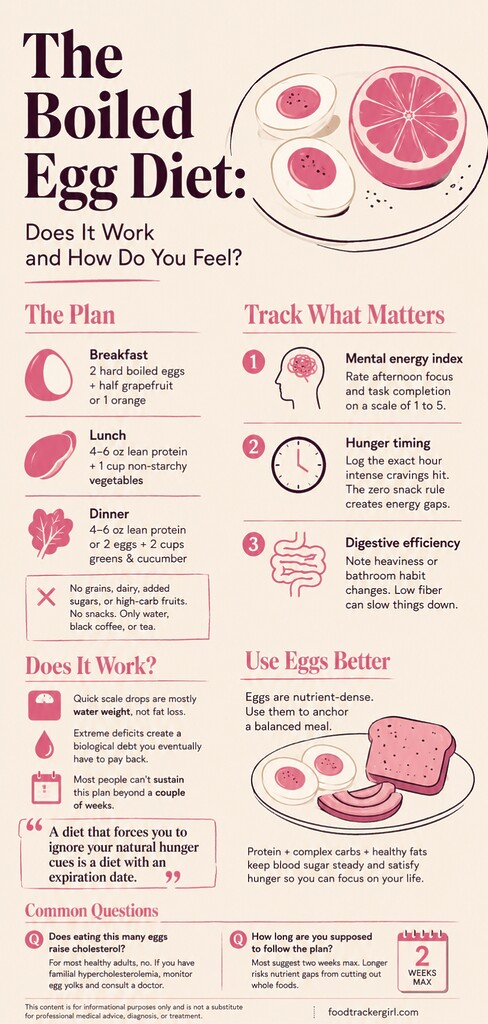
The rules are rigid and leave very little room for interpretation. You eat three meals a day with no snacks allowed in between. Only water or unsweetened black coffee and tea are permitted.
- Breakfast: Two hard boiled eggs and one specific serving of citrus, such as half a grapefruit or one medium orange. Grapefruit is historically chosen in these plans because its high water content can offer temporary physical fullness for very few calories.
- Lunch: A measured 4 to 6 ounces of lean protein, like a skinless chicken breast or white fish, plus one cup of steamed non starchy vegetables like broccoli or spinach.
- Dinner: Another 4 to 6 ounces of lean protein or two more eggs, accompanied by a light salad made of about two cups of fresh greens and cucumber.
Grains, dairy, added sugars, and even higher carbohydrate fruits like bananas or apples are completely off the table. The plan strips your daily intake down to the bare minimum, forcing your body to run on a fraction of its usual fuel.
Does the Boiled Egg Diet Work?
If you measure success entirely by the number on the scale going down quickly, you will likely see boiled egg diet results within the first week. By eliminating entire food groups and cutting out all snacks, you naturally eat far fewer calories than you burn.
During my years of cycles of restrictive dieting, I would have jumped at a plan like this because I just wanted fast numbers. But what I noticed in my own body over time was that extreme calorie deficits create a biological debt you eventually have to pay back. The initial weight you lose is often water weight associated with carbohydrate depletion, not actual fat loss.
A diet that forces you to ignore your natural hunger cues is a diet with an expiration date.
Because the plan is so restrictive, most people find it nearly impossible to sustain for more than a couple of weeks. Once you return to your normal eating habits, the water weight returns rapidly.

A Practical Framework for Tracking Body Response
Instead of just watching the scale, I invite you to shift your focus to tracking your body’s vital data. To understand the true impact of these strict rules, you can use a simple daily journal to log three specific signals:
- Mental energy index: Rate your afternoon focus and ability to complete tasks on a scale of 1 to 5. Without complex carbohydrates, your brain loses its preferred fuel. As a mom of two, trying to run on a tiny serving of eggs and citrus is a guaranteed recipe for total exhaustion before dinner.
- Hunger timing: Log the exact hour you experience intense cravings. The zero snack rule creates energy gaps that can easily lead to irritability and stress.
- Digestive efficiency: Note any feelings of heaviness or changes in your bathroom habits. Removing whole grains and beans drastically lowers your daily fiber intake, which often causes digestion to slow down noticeably.
Tracking these points gives you clear, personal data on how well these restrictions actually fit your biology.
A Better Way to Use Eggs
Eggs are genuinely fantastic. They are packed with high quality protein, essential vitamins, and choline, which supports brain health. You do not need to subject yourself to a punishing routine to get those benefits.
Instead of making eggs the only focus of a restrictive plan, use them to anchor a balanced meal. Two boiled eggs paired with a slice of whole grain toast and some avocado provides protein, complex carbohydrates, and healthy fats. That combination keeps blood sugar steady and actually satisfies your hunger so you can focus on your life, not just your next meal.
Common Questions
Does eating this many eggs raise cholesterol?
For most healthy adults, dietary cholesterol from eggs does not significantly raise blood cholesterol levels. However, if you have familial hypercholesterolemia, a genetic condition that keeps LDL cholesterol high even when you eat carefully, the rules change. In that case, experts generally recommend monitoring your egg yolk intake carefully and consulting a doctor before shifting your diet so drastically.
How long are you supposed to follow the plan?
Most proponents suggest doing it for two weeks maximum. Because the plan cuts out nutrient-rich foods like dairy, whole grains, beans, and many fruits, staying on it longer can lead to nutritional gaps.
The next time you are tempted by a rapid weight loss promise, pay attention to the rules it asks you to follow, and trust your body when it tells you it needs real nourishment to thrive.
Sources
- Weight loss: Feel full on fewer calories – Mayo Clinic, 2024.
- Low-carbohydrate diets and body water loss – Journal of Clinical Lipidology, 2019.
- Fiber intake and laxation review – Agency for Healthcare Research and Quality, 2025.
- Diet and familial hypercholesterolemia – Family Heart Foundation, 2024.
- Healthy diet guidance – World Health Organization, 2026.
- The health benefits of egg protein – Nutrients, 2022.
- Choline fact sheet – NIH Office of Dietary Supplements, 2022.
- Dietary fiber and glycemic control – StatPearls, 2025.
- Eggs and cholesterol – Heart Foundation NZ, 2026.