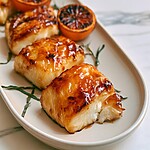
Charred Orange-Dijon Grilled Halibut
The secret to this foolproof fish is grilling fresh orange halves right alongside it, yielding a warm, smoky citrus juice to squeeze over the top. Sweet marmalade, umami-rich soy sauce, and tangy Dijon mustard create a sticky, caramelized glaze that perfectly complements the tender, flaky halibut.
- Total Time22 minutes
- Yield4 fillets (serves 4) 1x
Ingredients
Scale
Halibut & Grill Prep
- 1 1/2 lbs (680g) skin-on halibut fillets (four 6-oz portions)
- 1 tablespoon olive oil
- 1/2 teaspoon kosher salt
- 1/4 teaspoon freshly ground black pepper
- 1 medium orange, halved crosswise
Orange-Dijon Glaze
- 1/4 cup (80g) orange marmalade
- 1 tablespoon Dijon mustard
- 1 tablespoon soy sauce (or tamari)
- 1 tablespoon fresh lemon juice
- 1/4 teaspoon crushed red pepper flakes
For Serving
- 2 tablespoons fresh basil leaves, thinly sliced (chiffonade)
Instructions
- Prep the grill: Preheat your grill to medium-high (400°F to 425°F). Thoroughly clean and lightly oil the grates to prevent the lean fish from tearing.
- Mix the glaze: In a small bowl, whisk together the orange marmalade, Dijon mustard, soy sauce, lemon juice, and red pepper flakes until completely smooth. Set aside.
- Season the fish: Pat the halibut fillets completely dry with paper towels (this helps them sear rather than steam). Brush the flesh side evenly with olive oil, then season with kosher salt and black pepper.
- Grill the halibut and oranges: Place the halibut fillets skin-side down on the hot grates. Place the orange halves cut-side down directly on the grill next to the fish. Close the lid and let cook undisturbed for 8 to 10 minutes.
- Glaze and finish: When the halibut begins to turn opaque around the edges, brush the tops generously with the marmalade glaze. Leave the lid open and cook for 1 to 2 more minutes, just until the glaze becomes bubbly and sticky, and the thickest part of the fish reaches an internal temperature of 145°F and flakes easily with a fork.
- Serve: Carefully slide a spatula between the skin and the flesh to lift the fish off the grill (or remove it with the skin intact). Transfer to a platter alongside the charred orange halves. Squeeze the warm, caramelized orange juice over the fillets and scatter with fresh basil before serving.
Notes
- Why it works: Holding the glaze back until the final 2 minutes of cooking prevents the sugars in the marmalade from scorching into bitter carbon over the open flames, while still giving it enough time to melt into a glossy, sticky lacquer.
- Skin-on grilling: Leaving the skin on acts as a heat shield and structural support for the lean halibut. Even if you prefer not to eat the skin, grilling with it on prevents the fillet from falling apart when you try to lift it.
Nutrition (per serving — estimates)
Calories: 260 | Total Carbs: 16g (Fiber: 1g, Sugar: 14g) | Fat: 6g (Saturated: 1g) | Protein: 35g | Sodium: 600mg
Nutritional values are approximate, based on standard reference data (USDA FoodData Central). Actual values vary by brand and exact measurements. For precision, use a tracker like MyFitnessPal or Cronometer.
- Prep Time: 10 minutes
- Cook Time: 12 minutes
- Category: Main Course
- Method: Grilling
- Cuisine: American
Nutrition
- Serving Size: 1 fillet
- Calories: 260
- Sugar: 14g
- Sodium: 600mg
- Fat: 6g
- Saturated Fat: 1g
- Carbohydrates: 16g
- Fiber: 1g
- Protein: 35g